Here’s What ’1899’s Bold Music Choices Say About the Series.
Get link
Facebook
X
Pinterest
Email
Other Apps
Here’s What ’1899’s Bold Music Choices Say About the Series.
Not your usual sci-fi/supernatural soundtrack...
Audiences are rightfully raving about the new Netflix hit, 1899. It boasts a terrific blend of mystery, supernatural sci-fi elements, and an international flavor that make it a unique offering on the streaming service. While you can find many articles about what the thriller offers in the way of its character arcs and storylines, we wanted to draw attention to the unusual and eclectic musical choices that are heard at the end of each episode. The original music for the show and the theme song overheard with the opening credits are performed by Eliot Sumner, who happens to be the son of former Police frontman and musical icon, Sting. The original material was written by Ben Frost, who has scored other noteworthy shows, including Fortitude, Ridley Scott's Raised By Wolves, and Dark, another Netflix hit produced by the same group. But what is so unusual about 1899 are the tracks that the show's music supervisor, Ian Neil (Rocketman, Kingsman: The Secret Service) chose to serve as metaphorical outros, or closing songs — particularly juxtaposed against the show's eerie and paranormal elements and turn of the 19th century setting.
Anachronistic Tunes Set the Tone.
Typically, these types of shows will use a variety of scores that are ethereal or conjure metaphysical and otherworldly images that lend themselves to the genre material. While some of the original music does fall into this category with ominous synth sounds and forbidding orchestral riffs, 1899 also went in a completely different direction with other aspects of the soundtrack. Each episode of 1899 signals its conclusion with a collection of anachronistic classic rock songs and other pop hits from the '60s, '70s, and '80s that seem to be in stark contrast to the show's overall tone and mood. Neil's bold choices are representative of how the show is really making a go at setting itself apart within the supernatural space. By choosing a remix of the song "White Rabbit" by Jefferson Airplane as an introductory theme song, it's clear that both Frost and Neil are setting the tone and emphasizing the mind-bending nature of the show, but it's an intrepid choice considering it's a classic rock song that was released over 50 years ago in 1967.
Recognizable, Bold Song Choices.
Image via Netflix
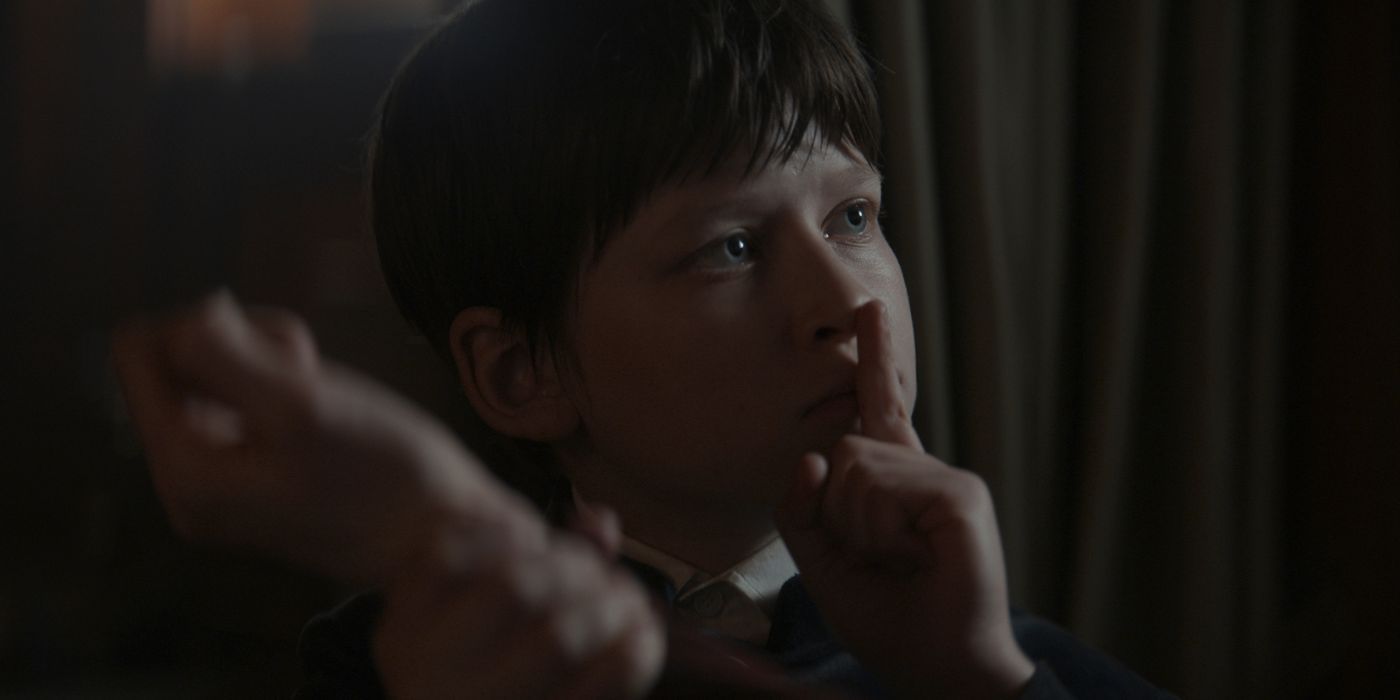
For Episode 2, entitled "The Boy," the choice was "Child in Time" by Deep Purple. The classic rock hit debuted in 1970.and obviously serves as a metaphor for the theme of the episode, which revolves around the discovery of the mysterious young boy that is found hidden away on the otherwise abandoned Prometheus.and the elements that he represents. Neil took another detour with his decision to wrap up Episode 4's "The Fight" to the familiar "(Don't Fear) The Reaper" by Blue Oyster Cult. While the hit song saw a renaissance in the Christopher Walken, "More Cowbell" sketch on Saturday Night Live in 2000, it was released back in 1976. Almost all the songs in 1899 are from a time that predates the majority of its viewing audience and are pulled from an unlikely genre. Right or wrong, there's no denying that Neil's choices give 1899 a different vibe and fresh musical feel even though the songs are classics callbacks from a bygone era.
Choosing Lyrics Over the Tone of the Show.
When the passengers aboard the Kerberos are seemingly hypnotized by a mysterious sound that leads them to march to their own demise by jumping overboard in Episode 5, entitled, "The Calling," Black Sabbath's "The Wizard" is aptly chosen as they all seem to be under some sort of trance that might be cast by a wizard and include the lyrics, "Never talking. Just keep walking. Spreading His magic." Again, it makes perfect sense, but the heavy metal song is a cut from the band's 1970 album, "Black Sabbath."
Similarly, in 1899's eighth and final episode, "The Key, David Bowie's "Starman" from his titular 1972 album gets the honor of being the final outro of the series as the curtain is finally pulled all the way back, and the show's true nature is revealed. It emphasizes Neil's penchant for using the 1899 to buck genre trends and opting for the lyrical correlations over the overall tonal aspect of the show. Maybe he's also giving us something familiar to hold onto in a world that feels so incredibly unfamiliar. Whatever the case, we're just glad he was given the artistic freedom to think outside the box and reach for something new under the guise of songs that are golden oldies.
From 'Shaun of the Dead' to 'Train to Busan': The 10 Best Zombie Movies of All Time, According to Letterboxd. The users of Letterboxd found the best films that follow the hordes of the undead. If you want to understand a people, look at its zombie movies. There might be no artifact more telling of a people than its depictions of the shuffling undead. After all, zombies are just us with a few key differences: all zombies carry echoes of a former life. These stories reflect their era, and are each a tombstone inscribed in eulogy to a time and a place. When there's no more room in Hell, the dead will walk the earth, preoccupied with the same things that troubled them in life: consumerism, xenophobia, government oppression, violence. And were some far-off archeologist to find a definitive record, there are few more telling than the list of most mentioned zombie movies on Letterboxd . Shaun of the Dead' (2004). Edgar Wright's Shaun of th...
Kaduna govt reaffirms commitment to 12 years of free education The Kaduna State Government has reaffirmed its commitment to providing every child resident in the state free primary, secondary and technical, as well as vocational education. This is contained in statement signed by the Special Adviser on Media and Communication, Mr Muyiwa Adekeye , on Tuesday. The statement said that Gov. Nasir El Rufai chaired the meeting of the State Executive Council. It said the extraordinary meeting of the State Executive Council discussed a memo presented by the Ministry of Education on funding the maintenance of school facilities. The special adviser further said that the state government would continue to faithfully implement the free senior secondary education policy and to discharge its primary responsibilities for its public schools. According to him, ‘’the council recalled that in 2015 the government explicitly banned payment of PTA fees and other levies in ...




Comments
Post a Comment