
From 'Shaun of the Dead' to 'Train to Busan': The 10 Best Zombie Movies of All Time, According to Letterboxd.

From 'Shaun of the Dead' to 'Train to Busan': The 10 Best Zombie Movies of All Time, According to Letterboxd.
Shaun of the Dead' (2004).

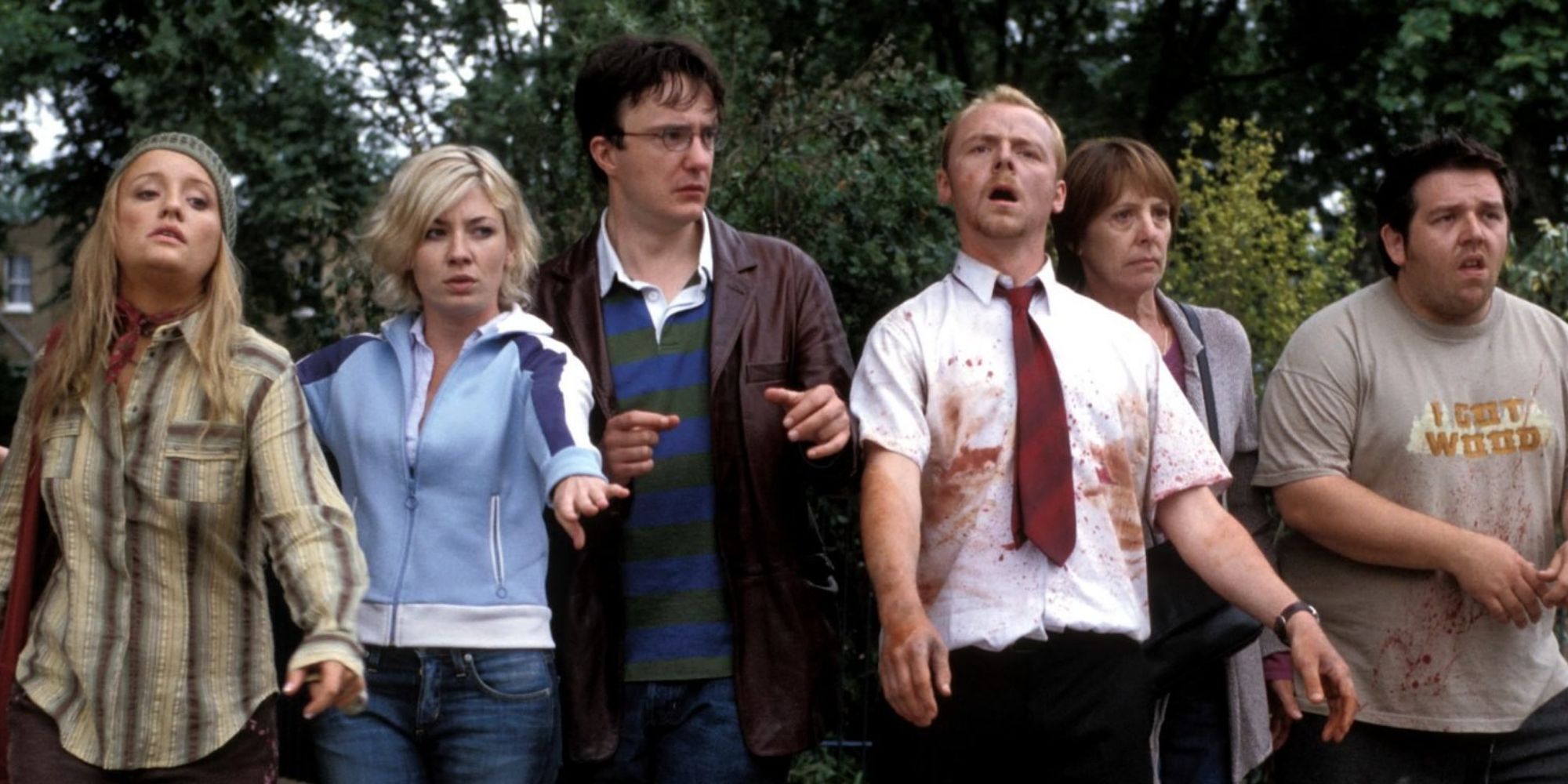
Edgar Wright's Shaun of the Dead is the moment where the zombie mythos goes back to the basics. While the titular dead may not have any self-awareness, the movie itself is a winking love letter that embraces zombie movie history. From the title to the barricaded third act, this is a feature-length salute to the works of George Romero.
The characters, particularly Simon Pegg's Shaun, are all numbed, not just to violence, but to life itself. Shaun is so locked into routine that he misses life. In that way, he himself is almost zombielike, and viewers are meant to examine how closely they might resemble the slack-jawed dead.
Night of the Living Dead' (1964)

28 Days Later' (2002)

In 2002, Danny Boyle released 28 Days Later, reflecting back to us the unique fears of this new century. When the deadly Rage Virus is spread all across Great Britain, the isle is quarantined and survivors are left to fend for themselves after the collapse of the government.
Boyle reflected a world that's fearful of its own future. He intentionally mirrors images of historical ethnic conflict and genocide. The film stands in bleak contrast with Edgar Wright's more lighthearted depiction England; gone are all the tokens of un-globalised Britannia (the cozy pub, the cricket bat, the Jaguar). Instead, this is an England upended by the encroaching "other."
Zombieland' (2009).

Like Shaun of the Dead before it, Zombieland is less parody than it is a loving homage. Penned by Deadpool's Rhett Reese and Paul Wernick, Zombieland is way more comedy than it is horror. However, this is absolutely a zombie movie, and it systematizes lots of the "rules" that have worked for survivors of the genre.
In this film, the zombies are infected, rather than undead. So, what separates humans from their ferocious ilk? Zombieland answers the question by slowly having its characters lower their guard throughout the runtime. The core characters all connect, showing that what differentiates people from their undead cousins is his need to relate to his fellow human.
'Dawn of the Dead' (1978).

Fourteen years after establishing the modern zombie genre, George Romero returned to show he was its master. This time, rather than concentrating on people stuck in a basement, Romero widens the scope to show zombies in a more urban setting.
The main characters in Dawn of the Dead become trapped in a mall, initially (and mistakenly) believing they've found sanctuary in this palace of consumerism. However, soon, the undead overtake the mall, doomed to repeat the rituals of commercialism that wasted away their lives.
[REC]' (2007).

In [REC], a camera crew and reporter follow a team of firefighters to a distress call involving an aggressive elderly woman. When it becomes clear the woman is infected, the building, and everyone inside, is placed into quarantine.
The filmmakers behind [REC] could not have understood how prophetic their found footage depiction of societal breakdown was. Bleak, and often disturbing, this movie is an accurate picture of frightened people under lockdown.
Day of the Dead' (1985)

Train to Busan' (2016).

Train to Busan is popular because it so clearly understands people. Add to that the spectacle of a high-speed train in the zombie apocalypse, and you have an incredible movie.
This is, ultimately, a story about sacrifice vs. selfishness and what it means to the characters in conflict. Would you risk your life to save a stranger?


Comments
Post a Comment